Mind, Body, Go!

Thursday, February 9, 2017

Sunday, February 5, 2017


Monday, April 25, 2016
PRIS Wellness Triathlon

Get your "Try" on!
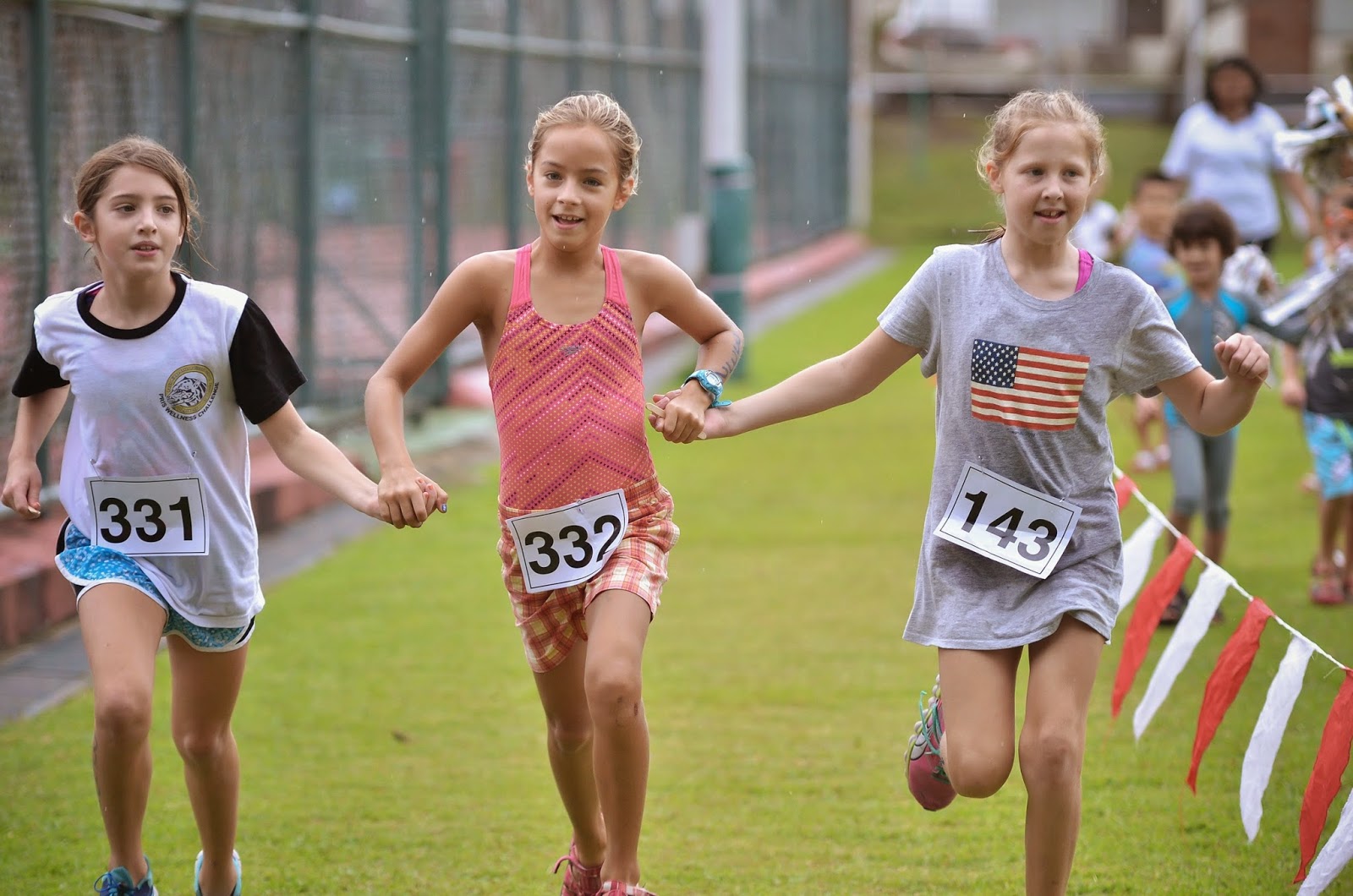
Students in EC to Grade 8 will be participating in the PRIS Wellness Triathlon on May 4th, 2016. Physical education programs have the responsibility to teach skills that students will need to participate in physical activity outside of the physical education class and skills they will need for a lifetime of physical activity. Skills learned in physical education class transfer to skills used in a child’s play.
• Build on past successes. Think about past experiences and how you successfully made them work. Consider what you had in place to support you and what you did ahead of time to help make the experience successful.
• Build on strengths. Spend time reflecting on areas you do naturally well in your life. Tap into your strengths as you try something new.
• Approach with curiosity. Instead of approaching new things with caution, try approaching unfamiliar things with curiosity.
• Find the fun. Focus on the enjoyment that can come from trying new things. When people find enjoyment in their habits, they are more likely to stick with them over the long term.
• Experience the benefits. Trying new things leads to increased confidence and self-esteem. It reduces boredom and loneliness, and it's a major driver in personal growth. Education may be the most important variable to improve health and prolong longevity, especially as we age.
“Our greatest weakness lies in giving up. The most certain way to succeed is always to try just one more time”.
Thomas A. Edison
Why “TRY”
Lifelong learning and social activity are important to mental wellbeing and happiness.
• Overcome fear. Any new adventure or activity involves some risk and uncertainty — but don't give up because of feeling embarrassed or being less than an expert, or for fear of holding back others or failing. Instead, approach it as an experiment. Let go of preconceived judgments of how something will turn out. Take away the ideas of failure, and take this time to learn what works and what doesn't work.• Build on past successes. Think about past experiences and how you successfully made them work. Consider what you had in place to support you and what you did ahead of time to help make the experience successful.
• Build on strengths. Spend time reflecting on areas you do naturally well in your life. Tap into your strengths as you try something new.
• Approach with curiosity. Instead of approaching new things with caution, try approaching unfamiliar things with curiosity.
• Find the fun. Focus on the enjoyment that can come from trying new things. When people find enjoyment in their habits, they are more likely to stick with them over the long term.
• Experience the benefits. Trying new things leads to increased confidence and self-esteem. It reduces boredom and loneliness, and it's a major driver in personal growth. Education may be the most important variable to improve health and prolong longevity, especially as we age.
Monday, February 22, 2016
Active Globe - Oh, The Places You Will Go!

Oh, The places you will go!
PE students in conjunction with
Transitioning activities completed in PAWS are participating in a Fitness Unit
titled Active Globe.
Students log kilometers of
running/walking and meters of climbing to earn travel currency. This is a
collaborative activity and everyone's efforts are added together for a final
total.
Heroes Unite - Find Your Inner Super Power
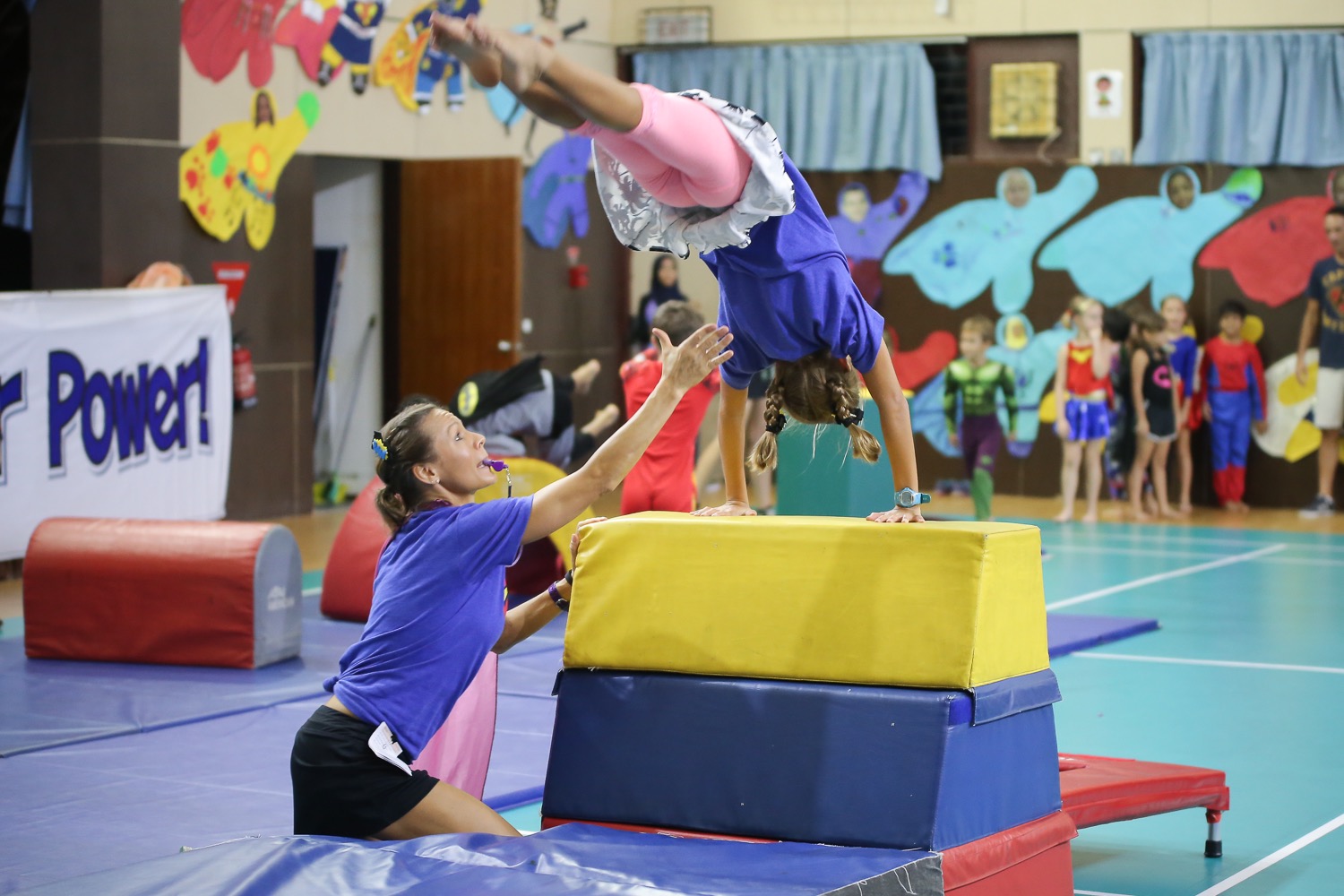
The PE Performance is always a highlight for students, teachers and staff. This year’s performance is very much student driven from the MS students demonstrating leadership skills to all students having a choice in music selection, skill choice and routine creation. It has been a pleasure to work with all PRIS students this school year. Hope you enjoyed the show!


Thursday, January 14, 2016
Incidental Exercise...Get up and Move!
January tends to be the month when we push the "restart" button. When we decide we need to refresh. Consider becoming a better mover. What are ways you can increase your movement during your day. Teachers are using brain breaks to provide more opportunities for daily movement. Some schools have added more recess time (from 20 minutes to 60 minutes). Some universities are requiring students to wear Fitbits.
Keep in mind that a working body tends to keep the brain working as well. If your family needs a restart, this is a great month to start new goals.

Want to know more? Check it out...
Fitbit..Trendy?
Keep in mind that a working body tends to keep the brain working as well. If your family needs a restart, this is a great month to start new goals.

Want to know more? Check it out...
Fitbit..Trendy?
Thursday, December 10, 2015
Friendship Games - Fitness, Friends, Fun
More and more research continues to be shared regarding the benefits of sport. While PE classes work hard to help develop the whole child, being in a "sport" can also help shape a person's character. This month over 150 students participated in the 9th Annual Friendship Games hosted by PRIS. It was a pleasure to see demonstrated through sport actions of commitment, honesty, integrity, self-discipline, friendship among many other valuable virtues.
Want to know more? Check it out...
True Sport
A growing body of research literature finds that in addition to improved physical health, sport plays a primarily positive role in youth development, including improved academic achievement, higher self-esteem, fewer behavioral problems, and better psychosocial.29,30 Many studies focus on the effects of sport on the five “C’s”—competence, confidence, connections, character, and caring—which are considered critical components of positive youth development.31,32 It has long been thought that the many facets of playing sport—the discipline of training, learning teamwork, following the leadership of coaches and captains, learning to lose—provide lifelong skills for athletes.
Sports do not build character. They reveal it. John Wooden, Legendary UCLA Basketball Coach
The literature on youth sport stresses the positive effects of participation in learning the important life skills of goal setting and time management combined with enjoyment; the development of a strong sense of morality; and the development of an appreciation of diversity.33 Longitudinal studies have shown that children and youth participating in sport, when compared to peers who do not play sport, exhibit:
• higher grades, expectations, and attainment;34
• greater personal confidence and self-esteem;
• greater connections with school— that is, greater attachment and support from adults;
• stronger peer relationships;
• more academically oriented friends;
• greater family attachment and more frequent interactions with parents;
• more restraint in avoiding risky behavior; and
• greater involvement in volunteer work (see Linver et al.35 for a summary).
These outcomes are thought to be related to the contribution of sport to learning values and skills associated with initiative, social cohesion, self-control, persistence, and responsibility.36 Theories of positive youth development stress the importance of sport in acquiring skills that are beneficial in other domains (e.g., school, family, work) that lead to better adaptive skills.37
Want to know more? Check it out...
True Sport
A growing body of research literature finds that in addition to improved physical health, sport plays a primarily positive role in youth development, including improved academic achievement, higher self-esteem, fewer behavioral problems, and better psychosocial.29,30 Many studies focus on the effects of sport on the five “C’s”—competence, confidence, connections, character, and caring—which are considered critical components of positive youth development.31,32 It has long been thought that the many facets of playing sport—the discipline of training, learning teamwork, following the leadership of coaches and captains, learning to lose—provide lifelong skills for athletes.
Sports do not build character. They reveal it. John Wooden, Legendary UCLA Basketball Coach
The literature on youth sport stresses the positive effects of participation in learning the important life skills of goal setting and time management combined with enjoyment; the development of a strong sense of morality; and the development of an appreciation of diversity.33 Longitudinal studies have shown that children and youth participating in sport, when compared to peers who do not play sport, exhibit:
• higher grades, expectations, and attainment;34
• greater personal confidence and self-esteem;
• greater connections with school— that is, greater attachment and support from adults;
• stronger peer relationships;
• more academically oriented friends;
• greater family attachment and more frequent interactions with parents;
• more restraint in avoiding risky behavior; and
• greater involvement in volunteer work (see Linver et al.35 for a summary).
These outcomes are thought to be related to the contribution of sport to learning values and skills associated with initiative, social cohesion, self-control, persistence, and responsibility.36 Theories of positive youth development stress the importance of sport in acquiring skills that are beneficial in other domains (e.g., school, family, work) that lead to better adaptive skills.37
Tuesday, November 3, 2015

Thursday, October 29, 2015
Keep it Moving- Brain and Body Connection!
Students at PRIS are running their own experiments. Students in middle school are collecting data on daily activity levels, nightly sleep, and emotions. Continue to check-in to see if practicing healthy habits has a positive influence on academic skills.
Want to know more? Check this out...
Naperville School District in Illinois, who experimented with a mandatory mile run at the very start of the school day, is a prime example. Kids in the Naperville School District not only outperformed neighboring districts, but whole countries. The eighth grade Naperville students that took the an international science test finished ahead of Singapore! As a comparison, U.S. students typically rank 18th in the world. They credit much of their academic results to a fitness-based physical education program. Yet only 6 percent of U.S. schools have physical education classes 5 times a week. In addition, 20 percent of U.S. elementary schools abolished recess in favor of increased classroom time to improve student achievement. Students who exercise, studies have shown, have better concentration and are better team players both in and out of the classroom.
Want to know more? Check this out...
Naperville School District in Illinois, who experimented with a mandatory mile run at the very start of the school day, is a prime example. Kids in the Naperville School District not only outperformed neighboring districts, but whole countries. The eighth grade Naperville students that took the an international science test finished ahead of Singapore! As a comparison, U.S. students typically rank 18th in the world. They credit much of their academic results to a fitness-based physical education program. Yet only 6 percent of U.S. schools have physical education classes 5 times a week. In addition, 20 percent of U.S. elementary schools abolished recess in favor of increased classroom time to improve student achievement. Students who exercise, studies have shown, have better concentration and are better team players both in and out of the classroom.
Saturday, October 3, 2015
Wellness Memoirs - How will your current health habits affect your future self?
Keeping it in Balance...Middle School students are heading toward healthy lifestyles. Data driven information collected from Fitbits, NTC and other helpful apps will be used to predict their quality of health in 5 years. Stay tuned!


Thursday, September 17, 2015
Teamwork and Geese!
Students in PAWS Class are learning about the "V" Formation... While teaching in Minnesota I first read “Lessons from Geese” that was largely based on the work of Milton Olson. I was the head gymnastics coach of a prominent high school and I was always looking for new activities to build teamwork. It is truly marvelous when groups of people are in sync. People feel more supported, people take healthier risks, and people in general are more successful and happier. In the event that a challenge arises, the group offers support, needed problem solving skills and resources to reach the intended goal. There is no doubt embracing a “V” formation within our own family as well as the PRIS community might be the best strategy for having a superb school year.
Want to know more? Check this out...
VIA Institute on Character
Teamwork
More on Teamwork

Want to know more? Check this out...
VIA Institute on Character
Teamwork
More on Teamwork
Fitness, Friends and Fun!
Quantified Fitness Stars
Students in PE class are putting their muscles and mind to work! Fitbits are in action and minds are working. Students collect data before and after a fitness related activity. Data will be used to determine if movement related activities incorporated throughout their day help them to reach their full potential.

Students in PE class are putting their muscles and mind to work! Fitbits are in action and minds are working. Students collect data before and after a fitness related activity. Data will be used to determine if movement related activities incorporated throughout their day help them to reach their full potential.

Wednesday, September 9, 2015
Growth Mindset
What kids can do is largely dependent on what they think they can do. Students in PAWS (Positive Attitude and Wellness in School) classes are opening their minds to visualization, self-talk, goal setting and much more, to begin school with a brain map for learning!

Want to know more? Check it out...
More on Mindset in Schools
Mindset Works
About Mindset
The concept of “mindset” has gained increasing attention since Stanford University psychologist Carol Dweck introduced it in her 2007 book Mindset: The New Psychology of Success.
Those with a “fixed” mindset believe that people’s intelligence and abilities are static and outside their control—the widely accepted theory of cognitive development through the 1960s. In contrast, those with a “growth mindset” know that intelligence is dynamic. As neuroscience has now decisively shown, the brain does change based on one’s experiences and efforts.
Regardless of the research, all of us develop beliefs about our own intelligence, beginning in childhood. Some children worry that they don’t have enough. Others grow up thinking that they can do anything if they just work hard at it.
These beliefs make a big difference in how children do in school, research shows. Even students who consider themselves “gifted” often avoid challenge, for fear they might lose status if they fail. But when we teach youth that intelligence is malleable, they more readily take on challenges, persist through difficulties, and experience intellectual growth. (Blackwell, Trzesniewski, & Dweck, 2007)

Want to know more? Check it out...
More on Mindset in Schools
Mindset Works
About Mindset
The concept of “mindset” has gained increasing attention since Stanford University psychologist Carol Dweck introduced it in her 2007 book Mindset: The New Psychology of Success.
Those with a “fixed” mindset believe that people’s intelligence and abilities are static and outside their control—the widely accepted theory of cognitive development through the 1960s. In contrast, those with a “growth mindset” know that intelligence is dynamic. As neuroscience has now decisively shown, the brain does change based on one’s experiences and efforts.
Regardless of the research, all of us develop beliefs about our own intelligence, beginning in childhood. Some children worry that they don’t have enough. Others grow up thinking that they can do anything if they just work hard at it.
These beliefs make a big difference in how children do in school, research shows. Even students who consider themselves “gifted” often avoid challenge, for fear they might lose status if they fail. But when we teach youth that intelligence is malleable, they more readily take on challenges, persist through difficulties, and experience intellectual growth. (Blackwell, Trzesniewski, & Dweck, 2007)
Wednesday, September 2, 2015
Healthy Minds and Bodies Under Construction!
Physical education and physical activity in schools have been linked to positive academic achievement and many other benefits. "Study after study has affirmed the importance of play in children’s physical and mental health. It helps boost language development, problem solving, risk management and independent learning skills. Play is linked to improvements in academic skills, classroom behavior, healthy emotional attitudes and better adjustment to school life". Debbie Rhea
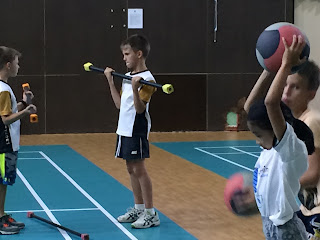
PE students balancing fitness and play!
Want to know more? Check it out...
Kids need to play at school




Note: Comments are moderated and for privacy reasons, cannot include students' names. Please direct specific inquiries via email.
PE students balancing fitness and play!
Want to know more? Check it out...
Kids need to play at school


Note: Comments are moderated and for privacy reasons, cannot include students' names. Please direct specific inquiries via email.
Monday, August 24, 2015
Making the grade with a mind-body connection!

Be Active Your Way
Saturday, May 23, 2015
TRYathlon!
"Individuals who are physically literate move with competence and confidence in a wide variety of physical activities." -Physical Health and Education Canada


Transfer of learning is a great way for teachers to
determine true understanding of concepts, knowledge and skill. When students are asked to use skills and knowledge in different and unique situations,
teachers refer to this as “Transfer of Learning”. Students in grade K-8
will be asked to demonstrate learning in fitness, leadership, sportsmanship,
communication and critical thinking when they participate in this year's Wellness
TRYathlon.
Want to know more?...Check it out!



Note: Comments are moderated and for privacy reasons, cannot include students' names. Please direct specific inquiries via email.
Mastering the Force-The Jedi Way!
PE students embark on a journey to “Master the Force”. As young Jedi Apprentice – Padawan you will have much to practice to become a Jedi Knight.
How Children Succeed: Grit, Curiosity, and the Hidden Power of Character. Students in PE class are exploring their inner strength through movement. Some people are natural jugglers and jumpers and will find they can juggle/jump within a couple of hours of practice. Others might need a little more time (between 2 days to 2 months), but practice and persistence is the key to becoming a good juggler/jumper. Once you learn the skills you will never forget it.


Note: Comments are moderated and for privacy reasons, cannot include students' names. Please direct specific inquiries via email.
How Children Succeed: Grit, Curiosity, and the Hidden Power of Character. Students in PE class are exploring their inner strength through movement. Some people are natural jugglers and jumpers and will find they can juggle/jump within a couple of hours of practice. Others might need a little more time (between 2 days to 2 months), but practice and persistence is the key to becoming a good juggler/jumper. Once you learn the skills you will never forget it.


Resources:
Juggling
Jump Roping
Note: Comments are moderated and for privacy reasons, cannot include students' names. Please direct specific inquiries via email.
Subscribe to:
Posts (Atom)