Mind, Body, Go!

Mind, Body, Go!

Pages

Monday, April 25, 2016

PRIS Wellness Triathlon

Get your "Try" on!

Students in EC to Grade 8 will be participating in the PRIS Wellness Triathlon on May 4th, 2016. Physical education programs have the responsibility to teach skills that students will need to participate in physical activity outside of the physical education class and skills they will need for a lifetime of physical activity. Skills learned in physical education class transfer to skills used in a child’s play. 

“Our greatest weakness lies in giving up. The most certain way to succeed is always to try just one more time”.
Thomas A. Edison


Why “TRY”
Lifelong learning and social activity are important to mental wellbeing and happiness.
• Overcome fear. Any new adventure or activity involves some risk and uncertainty — but don't give up because of feeling embarrassed or being less than an expert, or for fear of holding back others or failing. Instead, approach it as an experiment. Let go of preconceived judgments of how something will turn out. Take away the ideas of failure, and take this time to learn what works and what doesn't work.
• Build on past successes. Think about past experiences and how you successfully made them work. Consider what you had in place to support you and what you did ahead of time to help make the experience successful.
• Build on strengths. Spend time reflecting on areas you do naturally well in your life. Tap into your strengths as you try something new.
• Approach with curiosity. Instead of approaching new things with caution, try approaching unfamiliar things with curiosity.
• Find the fun. Focus on the enjoyment that can come from trying new things. When people find enjoyment in their habits, they are more likely to stick with them over the long term.
• Experience the benefits. Trying new things leads to increased confidence and self-esteem. It reduces boredom and loneliness, and it's a major driver in personal growth. Education may be the most important variable to improve health and prolong longevity, especially as we age.

Monday, February 22, 2016

Active Globe - Oh, The Places You Will Go!


Oh, The places you will go!

PE students in conjunction with Transitioning activities completed in PAWS are participating in a Fitness Unit titled Active Globe.

Students log kilometers of running/walking and meters of climbing to earn travel currency. This is a collaborative activity and everyone's efforts are added together for a final total. 

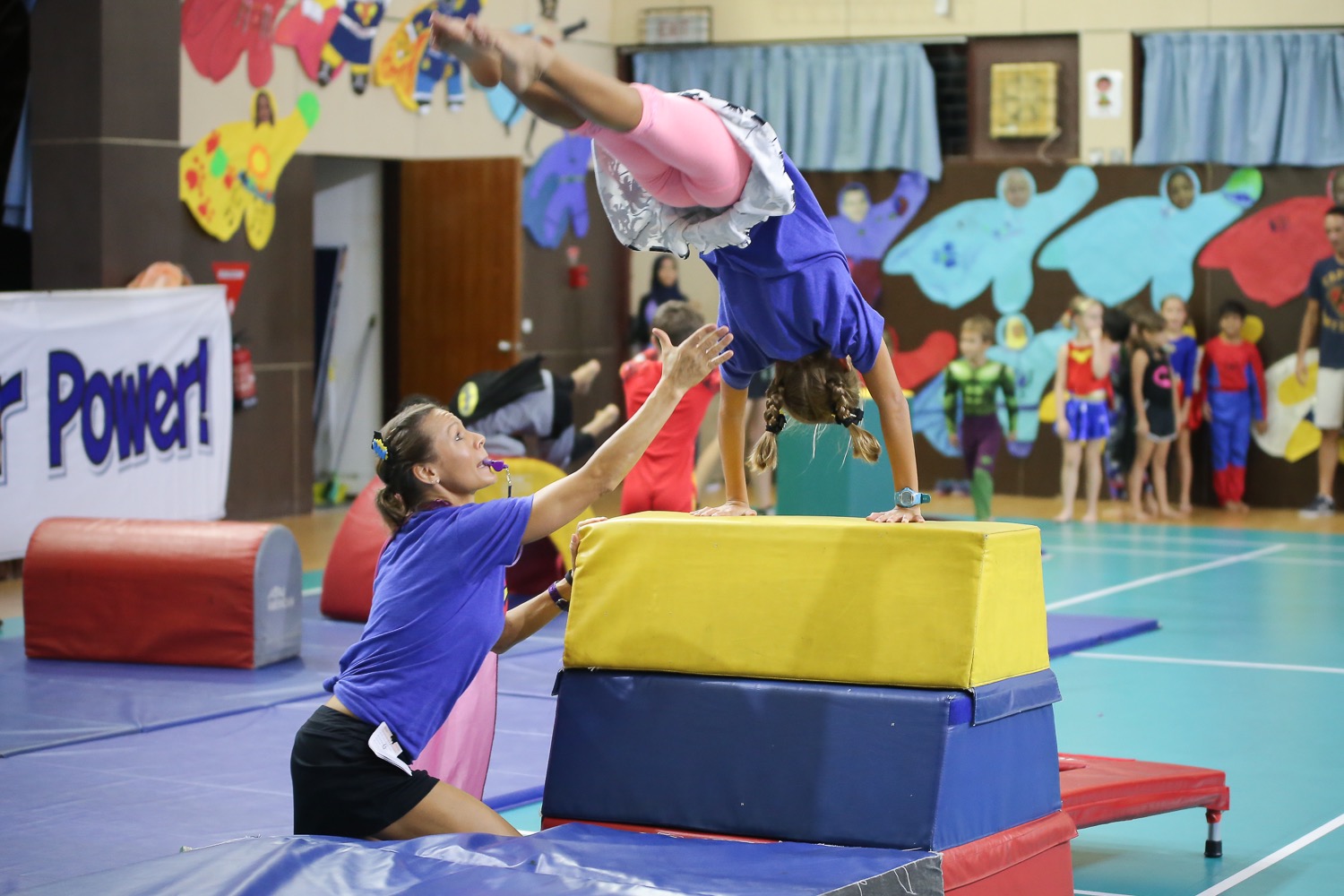
Heroes Unite - Find Your Inner Super Power


The PE Performance is always a highlight for students, teachers and staff. This year’s performance is very much student driven from the MS students demonstrating leadership skills to all students having a choice in music selection, skill choice and routine creation. It has been a pleasure to work with all PRIS students this school year. Hope you enjoyed the show!


Thursday, January 14, 2016

Incidental Exercise...Get up and Move!

January tends to be the month when we push the "restart" button. When we decide we need to refresh. Consider becoming a better mover. What are ways you can increase your movement during your day. Teachers are using brain breaks to provide more opportunities for daily movement. Some schools have added more recess time (from 20 minutes to 60 minutes). Some universities are requiring students to wear Fitbits. 

Keep in mind that a working body tends to keep the brain working as well. If your family needs a restart, this is a great month to start new goals. 


Want to know more?  Check it out...

Fitbit..Trendy?

Thursday, December 10, 2015

Friendship Games - Fitness, Friends, Fun

More and more research continues to be shared regarding the benefits of sport. While PE classes work hard to help develop the whole child, being in a "sport" can also help shape a person's character. This month over 150 students participated in the 9th Annual Friendship Games hosted by PRIS. It was a pleasure to see demonstrated through sport actions of commitment, honesty, integrity, self-discipline, friendship among many other valuable virtues.


Want to know more?  Check it out...

True Sport
A growing body of research literature finds that in addition to improved physical health, sport plays a primarily positive role in youth development, including improved academic achievement, higher self-esteem, fewer behavioral problems, and better psychosocial.29,30 Many studies focus on the effects of sport on the five “C’s”—competence, confidence, connections, character, and caring—which are considered critical components of positive youth development.31,32 It has long been thought that the many facets of playing sport—the discipline of training, learning teamwork, following the leadership of coaches and captains, learning to lose—provide lifelong skills for athletes.
Sports do not build character. They reveal it. John Wooden, Legendary UCLA Basketball Coach
The literature on youth sport stresses the positive effects of participation in learning the important life skills of goal setting and time management combined with enjoyment; the development of a strong sense of morality; and the development of an appreciation of diversity.33 Longitudinal studies have shown that children and youth participating in sport, when compared to peers who do not play sport, exhibit:

• higher grades, expectations, and attainment;34

• greater personal confidence and self-esteem;

• greater connections with school— that is, greater attachment and support from adults;

• stronger peer relationships;

• more academically oriented friends;

• greater family attachment and more frequent interactions with parents;

• more restraint in avoiding risky behavior; and

• greater involvement in volunteer work (see Linver et al.35 for a summary).

These outcomes are thought to be related to the contribution of sport to learning values and skills associated with initiative, social cohesion, self-control, persistence, and responsibility.36 Theories of positive youth development stress the importance of sport in acquiring skills that are beneficial in other domains (e.g., school, family, work) that lead to better adaptive skills.37

Thursday, October 29, 2015

Keep it Moving- Brain and Body Connection!

Students at PRIS are running their own experiments. Students in middle school are collecting data on daily activity levels, nightly sleep, and emotions. Continue to check-in to see if practicing healthy habits has a positive influence on academic skills.

Want to know more?  Check this out...

Naperville School District in Illinois, who experimented with a mandatory mile run at the very start of the school day, is a prime example. Kids in the Naperville School District not only outperformed neighboring districts, but whole countries. The eighth grade Naperville students that took the an international science test finished ahead of Singapore! As a comparison, U.S. students typically rank 18th in the world. They credit much of their academic results to a fitness-based physical education program. Yet only 6 percent of U.S. schools have physical education classes 5 times a week. In addition, 20 percent of U.S. elementary schools abolished recess in favor of increased classroom time to improve student achievement. Students who exercise, studies have shown, have better concentration and are better team players both in and out of the classroom.